Zum Hauptinhalt springen
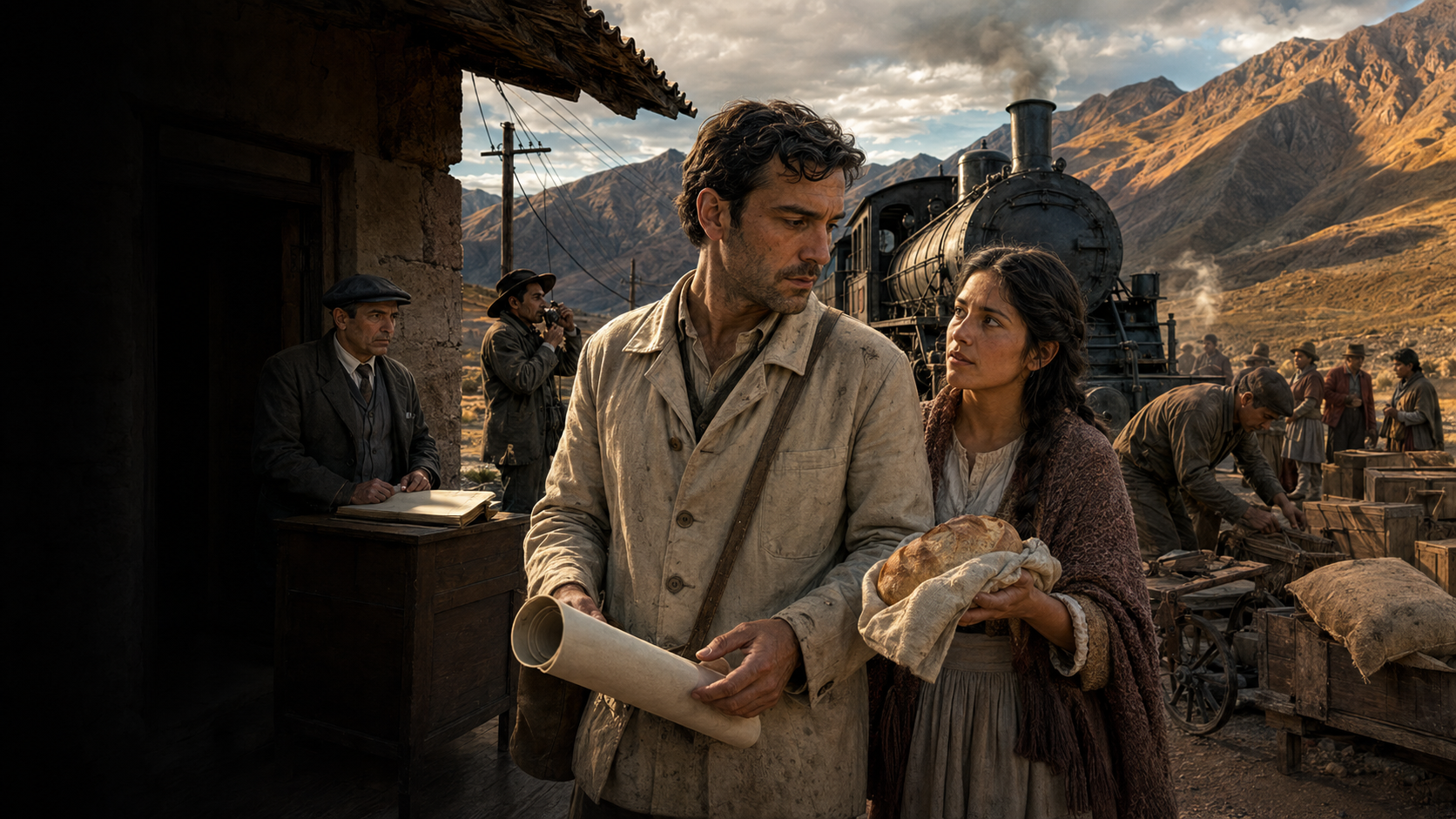
In the summer of 1937, an engineer named Tomás Arismendi arrives in Larija to survey the branch line for closure. He is methodical, solitary, and certain that the railway is a financial drain that must be terminated. His report will be the final one; the central office has promised as much. But Larija works on him slowly. The stationmaster shows him the ledgers, the freight that keeps the upland farms alive. The telegraph operator teaches him to hear the weather in the wires. The mechanic lets him turn a wrench on the old locomotive. And the girl who sells bread at the morning train makes him laugh for the first time in years. Tomás knows the numbers. The gradient is too steep, the maintenance too costly, the traffic too thin. Every engineering principle says the line should close. But the forty people of Larija are not principles. They are flesh and breath and stubborn hope. When the day comes to write his report, he sits in the station office with the ledger open and the window ajar, and he writes that the line is viable—that with modest investment it can serve the region for decades. He knows it is a lie. He files it anyway. The Gradient follows the summer that leads to that moment, and the quiet aftermath. It is not a story of grand gestures but of small ones: a shared cup of mate, a repaired window latch, a train that arrives on time against all odds. The moral question is not whether Tomás will lie—we know he will—but how he comes to believe the lie is worth telling, and what it costs him to live with it.

Auszug lesen

The Tuesday train came up the last of the Cuesta de Larija at walking pace, and stopped where the platform ran out of concrete. One man stepped down: a city coat buttoned to the throat, a leather case held against his chest as if the wind might take it. Mind the gap, señor. The step is higher than the company thinks. Thank you. The company thinks a great many things are lower than they are. His shoes crunched on the gravel where the concrete gave out, and after three steps he stopped, because the air had simply stopped arriving. Forgive me. The air. I climbed four hundred metres an hour for…

Die Welt

The Soledad Railway

The Soledad Railway is a narrow-gauge line clinging to the high Andes, connecting a handful of mining towns to the capital. The town of Quillcay, at 4,200 meters, is the highest station and end of the line. For six months of the year, snow and avalanches make the pass impassable, and the railway officially shuts down. The stationmaster is the sole authority, maintaining the empty station and a timetable for trains that no longer run—a ritual of hope and duty. The town itself is a collection of forty souls: railway families, a few miners, a telegraph operator, a priest. Life is pared down to essentials: water from the communal pump, news by telegraph, heat from llama-dung stoves. The thin air makes every exertion a labor, and the isolation breeds secrets as dense as the fog that rolls down from the peaks. The railway is both lifeline and curse: it brings supplies and news, but also audits, inspections, and the outside world's demands. The company offices in the capital are a distant, faceless bureaucracy, and the line's chief engineer, based in Quillcay, wields enormous power over maintenance schedules and budgets. Paperwork is the currency of truth: ledgers, timetables, telegrams, and audit reports. In this world, a misplaced entry can be a death sentence, and a forged signature can summon a ghost.
Diese Welt erkunden

Wen du treffen wirst

  • Tomás Arismendi

    Tomás Arismendi

    Railway survey engineer

    Railway survey engineer Tomás Arismendi brings an outsider’s precision to the high mountain line. Polite and slightly overwhelmed by the altitude, he carries his satchel as though the ground itself might shift.

  • Celestina Huamán

    Celestina Huamán

    Telegraph operator

    Telegraph operator Celestina Huamán has the stillness of someone always listening beyond the obvious signal. Ink-stained fingers and a callus from the key reveal how much of the valley passes through her hands.

  • Don Julián Quispe

    Don Julián Quispe

    Stationmaster

    Stationmaster Don Julián Quispe keeps Larija’s departures and interruptions in careful copperplate. He knows the line’s history and has lived long enough to discover that keeping a true book does not settle every duty.

  • Renato Cáceres

    Renato Cáceres

    Larija locomotive mechanic

    Renato Cáceres keeps the old tank engine running with scarce parts and exacting hands. He distrusts polished promises from Central and respects people who will stay to do the work.

  • Ana María Mamani

    Ana María Mamani

    Bread seller at Larija station

    Ana María Mamani sells warm bread at the morning train and keeps her own careful tally. Her practical wit belongs to a household shaped by flour deliveries, track work and the railway's uncertain future.

  • Leandro Mamani

    Leandro Mamani

    Track ganger and Ana María’s husband

    Leandro walks the Larija track before the working, listens to sleepers and checks what rain has moved. Off duty he laughs at his own dancing and makes room for his children’s games.

Was dich erwartet

  • 1 Episode
  • Wen du treffen wirst Tomás Arismendi, Celestina Huamán, Don Julián Quispe, Renato Cáceres, Ana María Mamani, Leandro Mamani
  • Die Welt The Soledad Railway

Kostenlos starten, ohne Konto

Dieser Gaststart ist kostenlos. Kein Konto erforderlich.

5 Spieler
— Bewertung
Smagik 30 Geschichten
Profil ansehen